Residual Current Devices (RCDs) are one of the most important electrical safety components found in homes and businesses across Nottingham. They are designed to protect people from electric shock and reduce the risk of electrical fires.
However, many properties in Nottingham—especially older homes—still have outdated RCD protection that may no longer meet current UK wiring regulations (BS 7671).
In this guide, our qualified Nottingham electricians explain the different types of RCDs, what they are used for, and how to know which one is right for your property.
An RCD monitors the flow of electricity through a circuit and instantly disconnects the power if it detects a fault. This usually happens when electricity leaks through an unsafe path, such as damaged wiring or contact with a person.
RCD protection is essential in:
Nottingham homes and flats
Rental properties requiring EICR certificates
Commercial premises and offices
Outdoor circuits and garden electrics
If your property does not have suitable RCD protection, it may fail an electrical safety inspection.
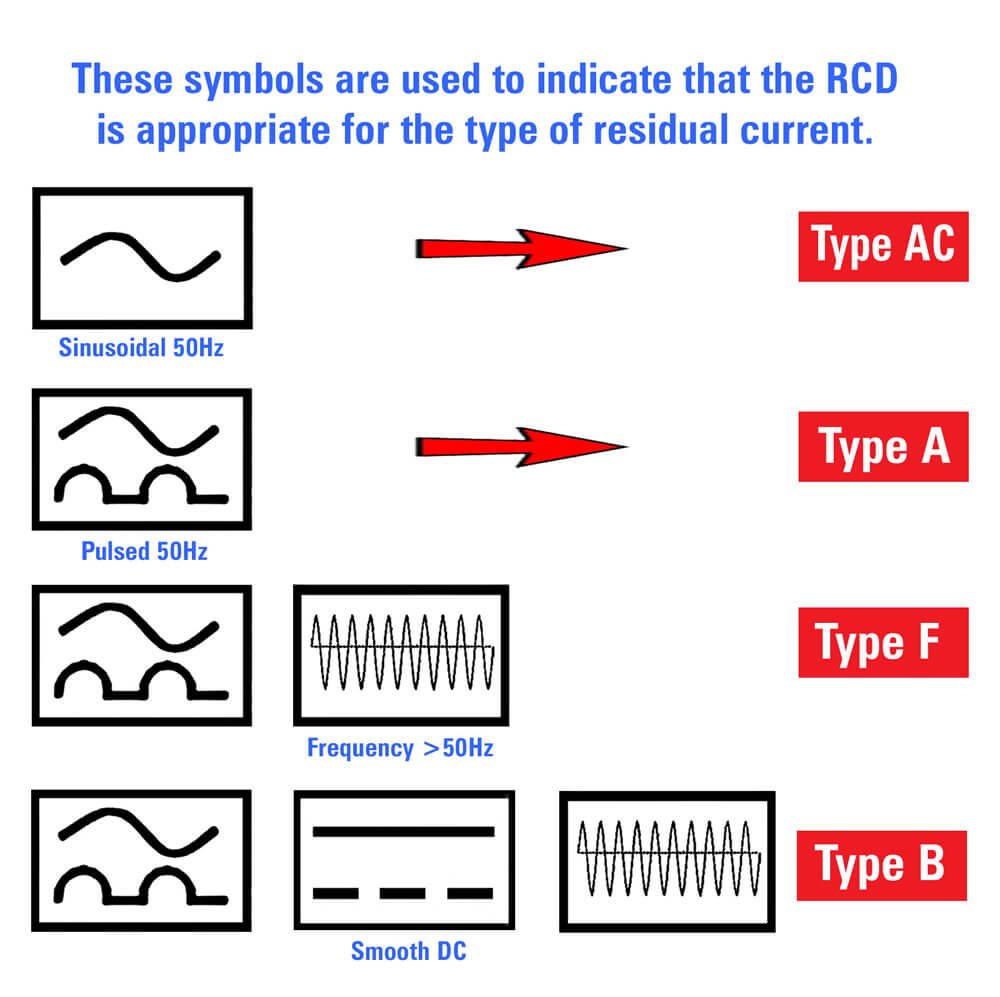
Type AC RCDs respond only to alternating current (AC). These were common in older consumer units installed many years ago.
Where they are found:
Older Nottingham properties
Outdated fuse boards
Important:
Type AC RCDs are no longer recommended for most modern electrical installations and are often flagged during EICR inspections in Nottingham.
Type A RCDs can detect both:
Alternating current (AC)
Pulsating DC currents produced by modern appliances
Common in Nottingham homes with:
Washing machines and tumble dryers
Induction hobs
Modern kitchens and extensions
This is now the minimum standard for most domestic properties.
Type F RCDs are designed for appliances with variable speed drives.
Typically required for:
Heat pumps
Air conditioning systems
Inverter-driven equipment
As more Nottingham homes move toward energy-efficient systems, Type F RCDs are becoming increasingly common.
Type B RCDs offer the highest level of protection and are mandatory in certain installations.
Used for:
Electric vehicle charging points
Solar PV systems
Commercial and industrial equipment
If you are installing an EV charger in Nottingham, a Type B RCD (or equivalent protection) is often required to remain compliant.
An RCBO combines RCD protection and circuit breaker protection into a single device.
Benefits:
Each circuit is protected individually
Fewer power outages during faults
Improved safety and reliability
Most modern consumer unit upgrades carried out by Nottingham electricians now use RCBOs as standard.
Incorrect or outdated RCD protection can result in:
Frequent nuisance tripping
Increased safety risks
Failure of EICR inspections
Non-compliance with current regulations
Many electrical faults found in Nottingham properties are linked to incorrect RCD selection or ageing consumer units.
You may need an inspection if:
Your fuse board is more than 10–15 years old
Your consumer unit contains a Type AC RCD
You are a landlord requiring an EICR in Nottingham
You are adding an EV charger or new circuits
A professional inspection can confirm whether your system is safe and compliant.
Our experienced Nottingham electricians carry out: RCD inspections and testing, Consumer unit upgrades, Electrical safety certificates (EICR), Emergency electrical repairs, We work across Nottingham and surrounding areas, providing safe, fully certified electrical solutions.
Book Online Now






Call us directly for immediate emergency response, or book online for fast same-day service — confirmed in minutes.